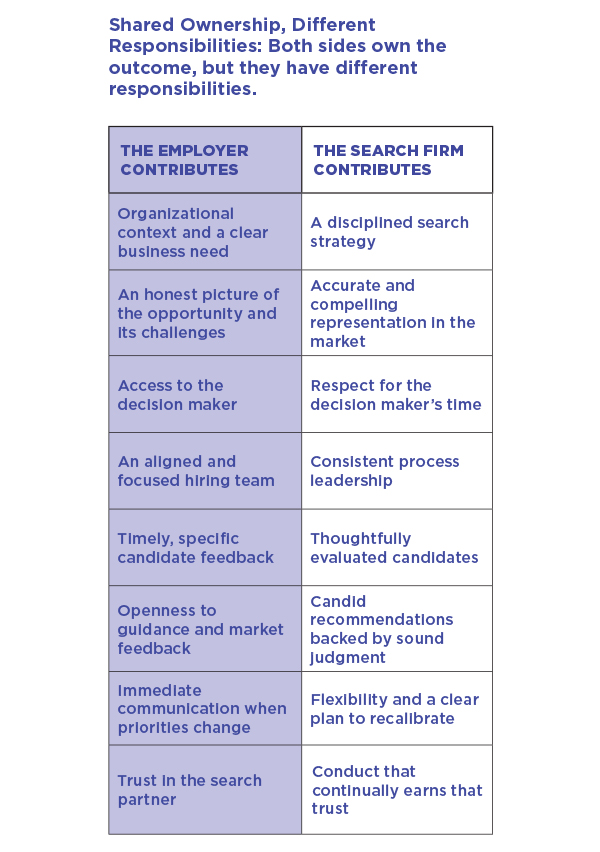
A successful search is a partnership, and both sides own the outcome.
Deciding to work with an executive search firm is a big decision, especially when retaining a firm for the first time. It is a substantial investment where mutual trust is essential. Keep in mind that the investment is on both sides.
During the initial conversations, pay attention to what the executive search consultant is asking. Are they trying to understand the company, the need, the challenges, and the role? Or are they primarily focused on pitching their services?
That evaluation should go both ways. A search firm commits significant time, resources, relationships, and credibility to every search it accepts. At Joe Produce Search, we will not take on a search unless we are confident that we understand the need and can deliver results.
Vetting the firm matters, but choosing one is only the beginning—hiring a search firm is not a handoff. Companies hire executive search firms for their expertise, industry relationships, objectivity, and ability to reach candidates they may not find on their own. The firm should lead the process, evaluate talent, and keep the search moving. Even an excellent firm cannot operate in a vacuum.
The employer does not need to manage the search—that is why it hired the firm. But it must provide clarity, access, alignment and timely feedback.
The search firm knows how to navigate the talent market. The employer knows the organization. The firm should carry the process, and the employer must remain close enough to provide direction, context, and decisions.
Clarity Comes Before Candidate Activity
A search firm can help sharpen the position, challenge assumptions, and translate the company’s needs into a candidate profile. What it cannot do is manufacture organizational clarity where none exists. Keep the core hiring team small and make sure everyone agrees on how candidates will be evaluated. Although others may provide input, one person should own the final decision and remain actively involved.
Ideally, that person is also the leader to whom the executive will report. Hiring for a position when the direct leader is not in place and active in the search creates significant risk for everyone involved.
Scheduling and logistics can be delegated. Conversations about the direction of the role, candidate fit and changing priorities should not be.
Trust the Firm or Do Not Hire Them
The firm must earn trust through preparation, transparency, sound judgment and follow through. Once the search begins, let the firm lead. Be receptive to guidance, market feedback and difficult conversations. A successful partnership allows for disagreement. What it cannot withstand is guarded communication or withheld concerns.

If either side feels the search is moving in the wrong direction, stop and regroup. A thoughtful reset can save a search. Quietly moving the target usually undermines it.
Take the Skeletons Out of the Closet
A good search consultant will carefully vet a candidate’s background, reputation and potential concerns. The employer should approach the process with the same openness.
Every company has challenges. Perhaps the position has experienced high turnover, the leadership team has not always been aligned or the organization is navigating significant change. There may also be perceptions in the marketplace that are accurate, outdated, or somewhere in between.
This is especially important in the close-knit produce industry. The best executives will do their homework, ask questions, and pay attention to word on the street.
The search firm should not learn about company challenges from a candidate. Surprises can damage the credibility of both the firm and the employer. Sharing the skeletons does not mean airing every piece of company business. It means trusting the consultant with the information needed to anticipate difficult questions and represent the opportunity honestly.

Transparency does not weaken the company’s story. Handled well, it makes that story more credible. Your search partner represents you, and is often a candidate’s first introduction to the company and the opportunity. The best executives are going to ask a lot of questions.
When the consultant cannot answer reasonable questions, or the consultant and employer provide conflicting answers, it reflects poorly on both. If you want your search partner to tell your company’s story well, make sure they understand the whole story, not just the job description.
The Best Searches Are Partnerships
Executive search does not have to be scary. The real risk is entering a search without clarity, trust, access and shared ownership. When these elements are in place, both sides are positioned for success, and the employer is far more likely to realize the full return on their investment.