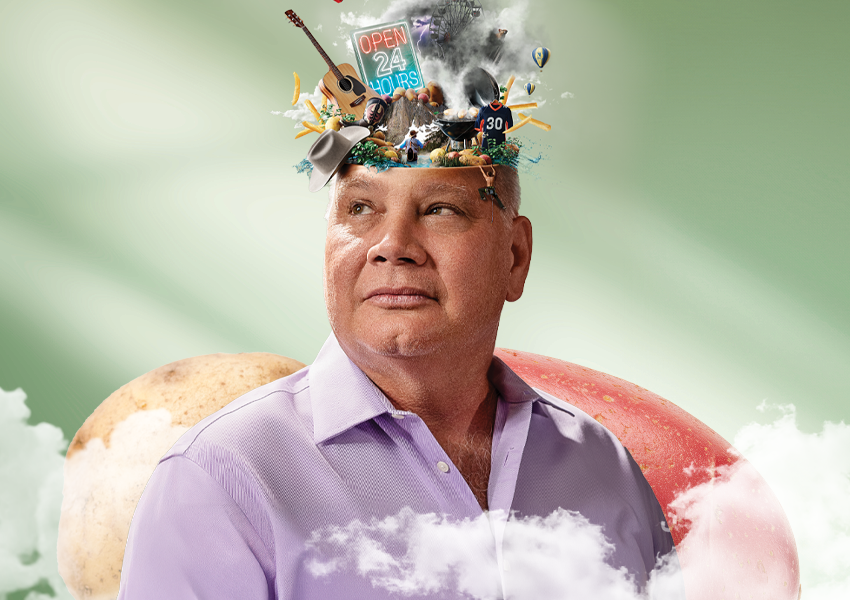
After 40 years in this business, I can tell you trust doesn’t happen because somebody shows up once a year with a sales deck and a handshake,” Patrick Mills tells me.
Trust happens when you consistently help people win.
This is something that the Idaho Potato Commission (IPC) does as a core tenet. By seamlessly interlocking the greater potato supply chain with the retail and foodservice companies it serves, IPC has made the category a stalwart in the market—and continuously, a destination for innovation and partnership.
IPC has built something rare in this industry: a legacy that retailers and operators genuinely trust and lean on. This is all distilled into IPC’s approach to its partnerships, which has allowed those relationships to endure for decades.
“What’s made IPC unique is that we’ve always approached partnerships like a long game. We’re not just saying, ‘Here are some Idaho potatoes and good luck.’ We’re bringing retailers and operators category insights, profitability tools, merchandising support, promotional ideas, and real people they can call when they need help,” Patrick, Western United States and Canada, says. “We constantly ask ourselves, ‘How do we help move more product, drive margin, and create a better customer experience?’”
If there is anything I have learned from Patrick, it is that there’s a difference between a retailer who carries Idaho potatoes and one who really builds a program around them. I ask Patrick: What does that look like when it’s done right—and what does IPC bring to the table to help get a partner there?
Patrick does not hesitate.
“Anybody can stock potatoes. Building a real Idaho potato program is different,” Patrick launches. “That’s where IPC comes in. We bring tools retailers can actually use: quarterly category reports, retail ad guidance, point-of-sale materials, merchandising inspiration, promotional kits, downloadable creative assets, and dedicated representatives, like me, who help tailor ideas to their market. We like to say: We’re not here to tell you to sell potatoes; we’re here to help you sell more potatoes, more profitably.”
“We’re bringing retailers and operators category insights, profitability tools, merchandising support, promotional ideas, and real people they can call when they need help.”
-Patrick Mills, Western United States and Canada, Idaho Potato Commission
Detailing the differentiation IPC brings to the table, Patrick dives into the fact that foodservice and retail are two very different conversations. This is another area where relationships become further tailored, and never one-size-fits-all.
“Retail and foodservice speak two different languages. Retail asks, ‘How do I drive basket size?’ Foodservice asks, ‘How do I drive profit and keep guests coming back?’” Patrick starts. “For retail, IPC focuses heavily on merchandising, shopper behavior, category growth, promotions, seasonal activation, and helping stores create displays and programs that convert shopper recognition into sales. On the foodservice side, it becomes much more operational: yield, consistency, portion sizing, menu profitability, recipes, labor considerations, and performance on the plate. IPC offers calculators, recipe support, menu inspiration, and tools that help operators understand the economics of serving premium Idaho potatoes.”
Patrick puts a question to me—and answers it. What is the biggest untapped opportunity? Premiumization.
“Consumers already recognize and trust the Idaho name. Operators sometimes underestimate how much that matters. Calling out Idaho potatoes on a menu or in an ad elevates consumer perceived value and helps drive stronger margins. People notice quality, and Idaho farmers have spent generations owning that recognition.”
He expands on where that trust actually lives—not in the brand alone, but at the point of purchase, where equity either converts or disappears.
“The beauty of the Idaho brand is that consumers already walk in with trust. They know the name, they know the quality, and frankly, Idaho potatoes have earned a little celebrity status over the years. But that brand equity only works if you bring it to life where buying decisions happen,” Patrick says. “At retail, that means effective signage, strong displays, seasonal merchandising, recipes, promotions, meal inspiration, and making Idaho potatoes visible. IPC provides point-of-sale materials, retail creative, advertising guidance, recipes, and promotional assets to help retailers turn a commodity purchase into a basket-building experience. In foodservice, it’s about menu language, highlighting Idaho potatoes on menus, building craveable applications, and reinforcing quality cues for guests.”
Patrick pauses to let it all sink in, then gives me the short long of it—though I know his strategy is far from basic.
“We like to say: We’re not here to tell you to sell potatoes; we’re here to help you sell more potatoes, more profitably.”
“I joke sometimes: If consumers already know and trust the brand, our job is simply to stop Idaho potatoes from playing hide-and-seek,” he says. “Though I do wish more people realized IPC isn’t just a logo on a bag; we’re a business partner. A lot of buyers think of us only when they need signage or a promotion, but IPC offers much deeper support.”
IPC brings the full toolkit: market insights, profitability reporting, merchandising guidance, seasonal planning, foodservice calculators, recipe development, creative assets, promotional support, shipper directories, and direct access to experienced representatives who understand regional opportunities and challenges. That is no short list.
“After four decades in this industry, I’ve learned one thing: The best partnerships happen when people pick up the phone early, not when there’s a problem. If you’re a retailer or operator and you’re not tapping into the IPC as a strategic resource, you’re probably leaving opportunity on the table. As somebody representing 600 Idaho potato farmers, our team is pretty passionate about helping partners win,” Patrick says.
Like Patrick has done many times as a retailer and now as a champion for 600 Idaho farmers. Pick up the phone, reach across the table—the partnership is only as powerful as its participants.