“Curiosity is in our DNA, the belief that there’s always a better way, that we can do better.”
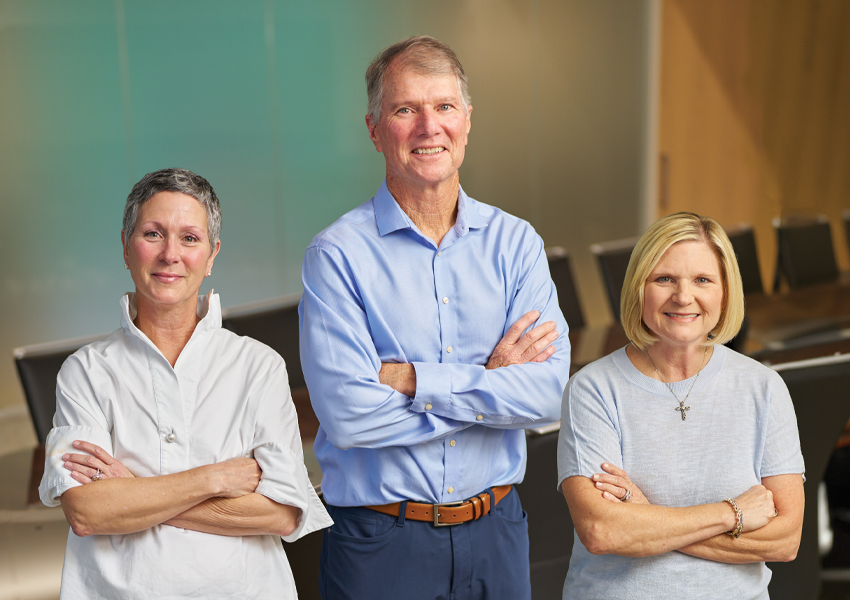
Sammy Duda tells me this as he sits contemplative in the afternoon light, sharing his family’s story with me. I can tell from the cast of his eyes that he has already weighed a lifetime of decisions before we even began our conversation this morning. The heat in Oviedo, Florida, is a subtle 92 degrees with a light 94 percent humidity. But Sammy, as always, seems acclimated to the environment, as comfortable in the heat as he is in a boardroom. With four generations of the Duda family work ethic coursing through his veins, you might expect a man like Sammy to have all the answers—which he just may—but today, as he has been for most of his career, he leads with curiosity, as do the rest of the fourth and fifth generations of Duda family members working for the company.
To endure for 100 years takes effort, awareness, and adaptability. To endure in fresh produce and thrive for that long takes something more. A hunger for a better life, and an unwillingness to value the fear of failure over the possibility of success. All characteristics Sammy attributes to an immigrant work ethic that seeded a dream transformed into a century-long legacy.
As DUDA and its legacy agriculture business, operated under wholly owned subsidiary Duda Farm Fresh Foods, celebrate their 100th anniversary in 2026, coinciding with America’s 250th, the story of a family who moved across an ocean to create a home lands succinctly. It is a milestone the family treats less like a finish line and more like a starting point—proof of what’s been built, and reason enough to keep building.
.jpg?Eg9uiCch6ozy4aJsoI1J6GgWijcHprCu "Andrew Duda")
It all started with a man named Andrew Duda, fresh from Austria-Hungary—present-day Slovakia—with 40 acres of farmland, and sights set on the American Dream.
“The Duda legacy started in a way only an immigrant could love: with very little and everything to gain. Most people looked at the first generations of Dudas here in Florida like they were nuts: the land they bought, some of the things they did. Our Founders’ mindset and drive came from having nothing. So they appreciated every opportunity that arose in front of them—whether or not they took it,” Sammy says.
That kind of gratitude has a way of ripening into something warmer across a hundred years of retelling. It is less about the risk that was taken, and more about who it was taken for. Ask any Duda family members why that first opportunity mattered, and the answer stops sounding like strategy and starts sounding like love.
As Amy Duda Kinder describes, Andrew didn’t leave his life because he thought it was going to be easier. Far from it.
“Andrew left his life because he knew he wanted something else for his family,” Amy, Corporate Vice President, Safety and Operational Effectiveness, tells me, leaning on the realism that has always been a stabilizing virtue, balancing and empowering the dreamer in each member of the Duda family. “They never gave up on the dream they wanted, and they were going to do whatever it took to get it.”
Some could say it was grit. Another name you could call it is grace.
“They had an enduring faith in the Lord, and that he would bless them, whatever happened; he was going to be there for them,” Tracy Duda Chapman, Chief Legal and Administrative Officer, shares. “It’s a story as close to the American Dream as one can get.”
"Andrew left his life because he knew he wanted something else for his family...They never gave up on the dream they wanted, and they were going to do whatever it took to get it."
Amy Duda Kinder, Corporate Vice President, Safety and Operational Effectiveness, DUDA
When I ask Amy and Tracy separately how it all began, neither one starts with strategy. Instead, both start with a man alone on a boat, and the family he left waiting.
Andrew arrived seeking land he could own and a place where he could practice his faith freely. His early farming attempts in central Florida failed outright, forcing the family back to Ohio meatpacking work to save enough to keep paying on their land.
“My great-grandfather came over here by himself, and three years later, his wife and children followed him. It was the need to build something they believed in that ushered them forward, something that matched their values, and their sense of what a purposeful life should be,” Amy began.
What comes next isn’t history so much as inheritance; family lore, unprovable and undimmed for it.
“As it goes,” Tracy begins, “our great-grandmother, tired of waiting for her husband to send for her, loaded up her children and arrived in America through Ellis Island, not speaking English. The cart carrying her family to the home near Oviedo also carried the letter announcing she was coming—arriving before the letter did, so that Andrew had no warning, but by the family’s telling, he was overwhelmed with joy.”
Between Sammy, Tracy, and Amy, each remembers specific details, and when I sit individually with each, I hear the same hundred-year story told three beautiful ways. That’s the beauty of a tale told by many. Love has a way of shaping a story over time, as each teller layers in their own recollections, their own favorite moments, until what’s left behind isn’t a transcript at all—it’s a design particular to storytelling itself. A language of love, for a labor of love. A story of persistence and determination against all odds.
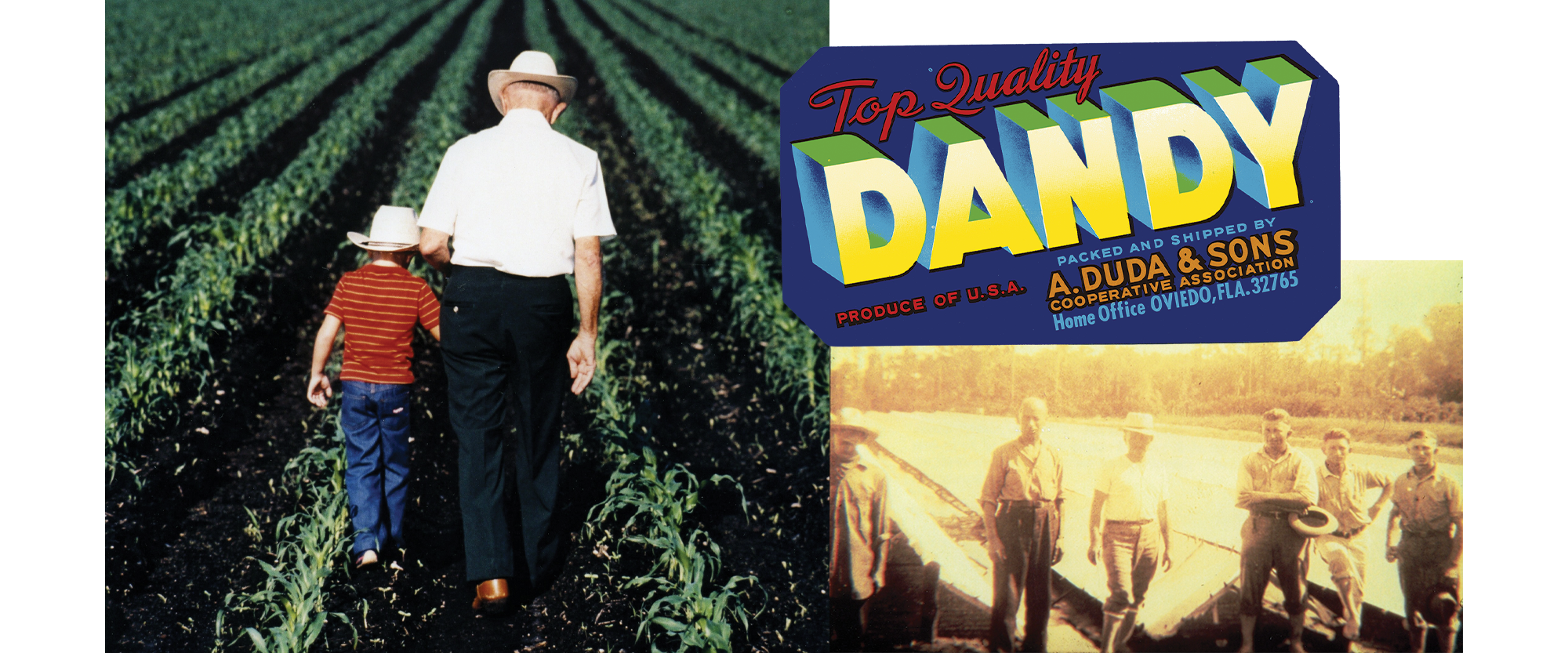
In 1926, that persistence produced the company’s first successful cash crop: a cart of celery to market, grown on the family’s original 40 acres near Oviedo. It was the first season profitable enough to fund the next. Curiosity and the drive to stay relevant kept the Dudas putting one foot, and then one cart, in front of another.
From there, the curiosity became a track record.
Once committed, the family engineered around every limitation. When a sales agent pointed out that celery grown in muck soil had better quality than celery grown in sand, the family went looking for muck, which is how they ended up farming in south Florida. And when the celery itself needed harvesting equipment that didn’t exist yet, they built it.
“In the ’50s,” Tracy says, “John, the oldest, patented what was at the time called the mule train—an implement attached to a tractor that would go through the field. This is just the way the family worked. Find a problem, solve it.”
Then solve it better.
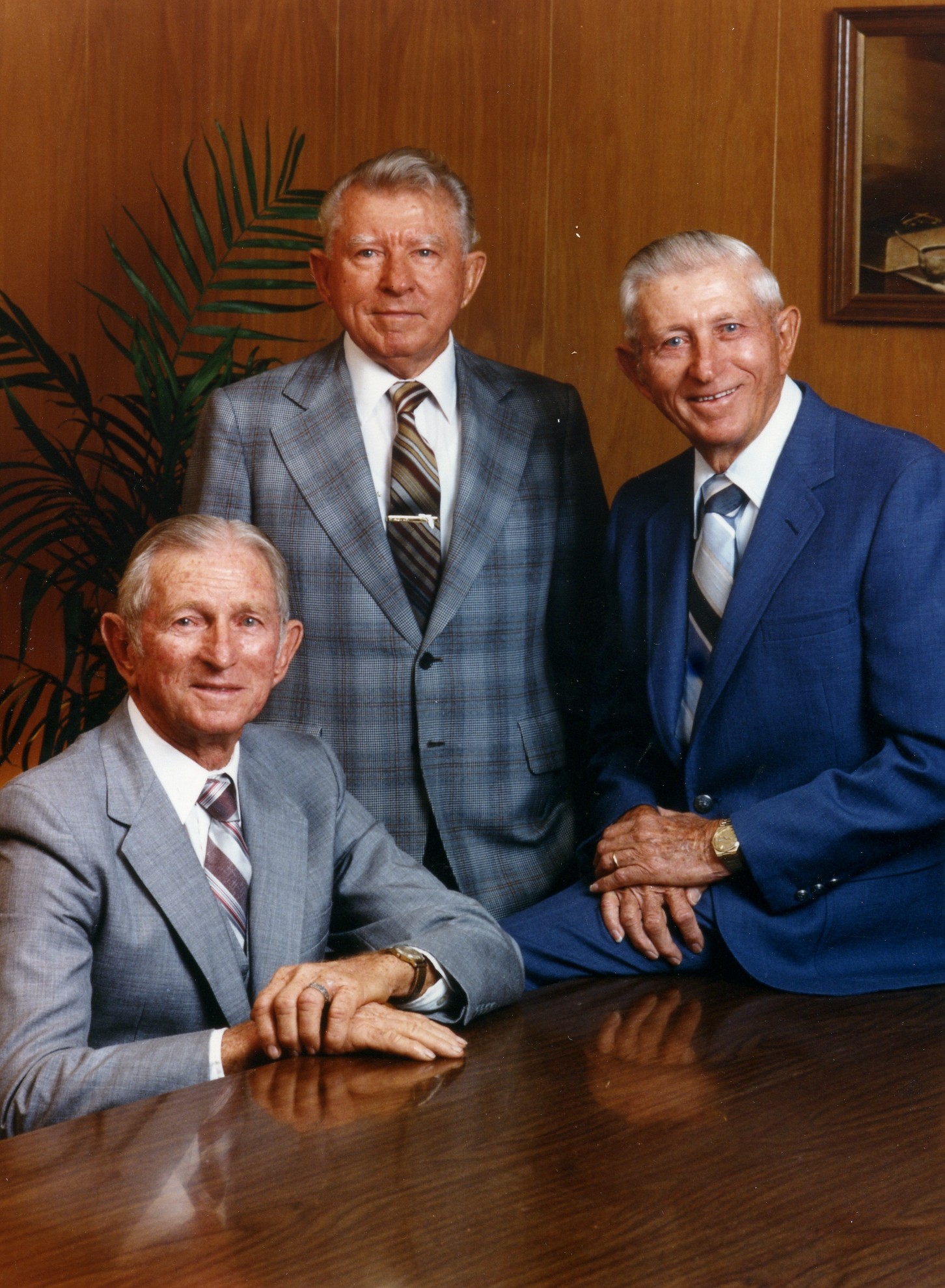
Andrew’s three sons—John, Andrew Jr., and Ferdinand, warmly known within the family as the Three Seniors—built the diversified company on top of that first crop. This first set of family boots planted firmly in fresh soil also planted a beautiful ideal, one that generations since have grown and cultivated. Each specialized: one in farming, one in mechanical innovation (patenting harvesting equipment), one in business and finance. Under their leadership, the company launched the Dandy brand in 1953, moved into muck-soil celery farming and citrus by 1960, and expanded into cattle and land holdings, including in Australia.
That same instinct to diversify applied to geography as much as it did to category.
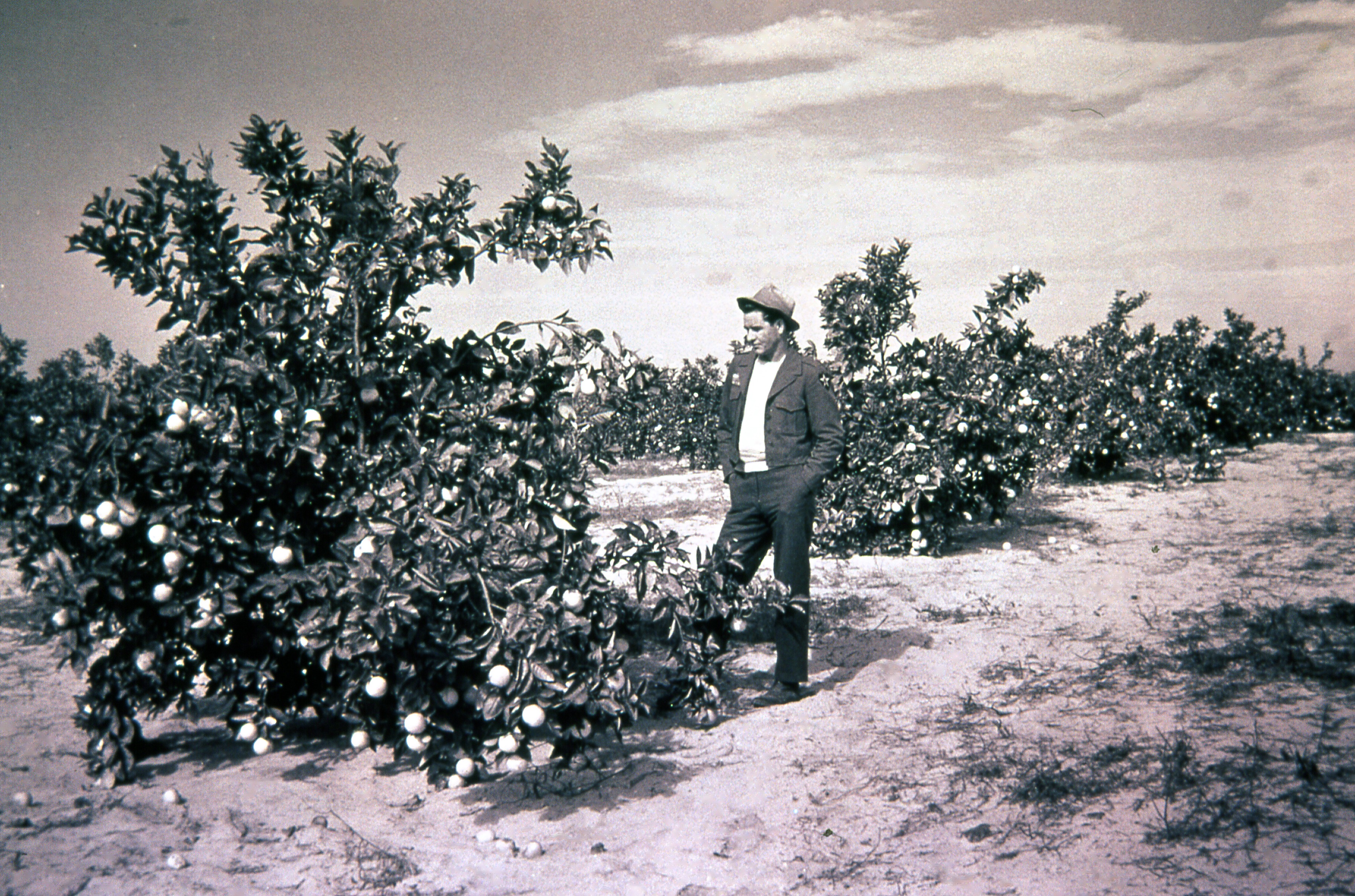
“We diversified within agriculture—cattle, leaf crops, sod, citrus—and then across the country,” Sammy explains, noting that it wasn’t a straight line. “We had to recognize that some of the business ventures we tried didn’t work. The onion business would be one, and Western citrus ended up being another. The industry changes quickly, and breaking into some categories is not always easy, if ever. I would say the most important thing the family learned, more so than whether to go into a certain business, was knowing when to get out.”
The third generation pushed the company beyond Florida entirely, into Texas, Arizona, and California, against internal skepticism that the company should stay put.
All of these pivotal moments stand out to Sammy, Amy, and Tracy, and they come together less as a distinct chronology of growth and more like moments of momentum adding to a steadily growing legacy.
“I don’t know that I really thought about our history and those pivotal decisions, many of which were made over so many years,” Sammy says. “I reflect back on what the family did in the face of criticism: You shouldn’t go to California. You shouldn’t get into value-added. You shouldn’t even go to South Florida. You’re good right here; you don’t need to expand beyond that. You don’t need to buy that ranch in what is now Viera. It’s a wet ranch; you would be crazy for buying that thing. Don’t get into home building; you guys don’t know what you’re doing. And yet, if we’d have hit the stop sign on all those decisions over the years, I don’t think we would be here. You don’t know if they’re all going to work out. It has taken collective courage, not just mine, but the organization’s, to make decisions where you don’t know the future. But that is how we got here.”
"The Duda legacy started in a way only an immigrant could love: with very little and everything to gain."
Sammy Duda, Chief Executive Officer, DUDA
That same generation built commercial real estate into a second core business alongside food and agriculture: starting in the 1980s with the new town of Viera—a name the family says is Slovak for “faith,” tying the development back to the same religious freedom that brought Andrew to Florida in the first place.
“Originally, they went to Valencia, California—one of those places that was developed as a new-town concept,” Tracy says. “They came back and said, ‘That’s what we want to do: build a new town.’”
And they did. A generation later, another leap of faith and determination brought them up against the luck (or lack thereof) in timing.
“Right before the Great Recession, we launched our home building business,” Tracy says. “We decided the real margin was in home building, not just selling lots.”
But the leap has since withstood the test of time and paid off.
The entry into real estate then expanded into a broader commercial property portfolio as the company diversified out of its sugar business and certain East Coast citrus landholdings. A fresh-cut processing facility opened in Oxnard, California, in 2008, alongside a deepening investment in proprietary celery genetics and value-added products.
By the time that facility opened, a new generation of Dudas was already at the table.
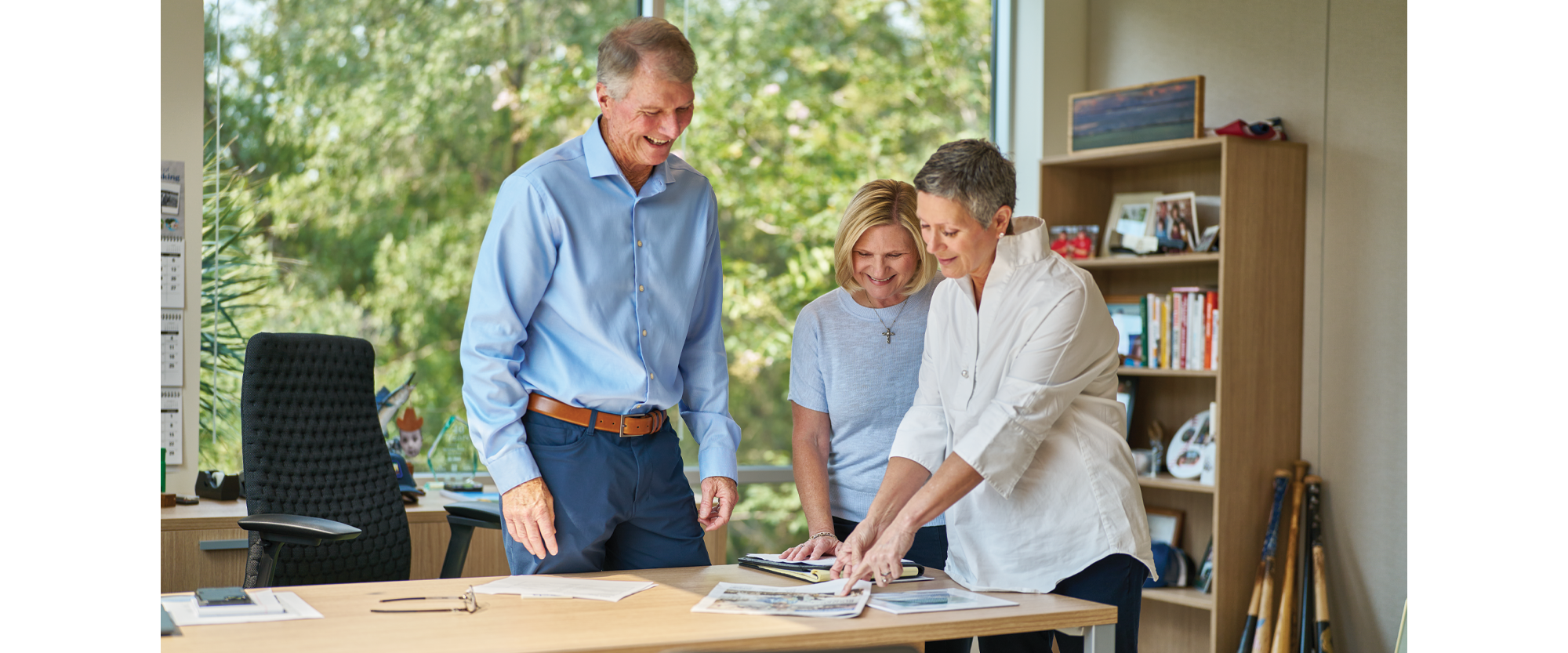
"It has taken collective courage, not just mine, but the organization’s, to make decisions where you don’t know the future. But that is how we got here."
Sammy Duda
The fourth generation—Amy, Tracy, and Sammy among them—joined in the early 1990s through the company’s family rotation program, then rose into today’s leadership: Sammy as Chief Executive Officer, Tracy overseeing legal and government affairs, Amy leading food safety and sustainability.
In 2026, DUDA marks its centennial with company-wide celebrations, employee recognition, and philanthropy tied to its founding tradition of tithing.
Ask any of them what a hundred years actually requires, though, and nostalgia isn’t the answer you get.
“Any company that lasts 100 years, you’ve had to adapt, be willing to change‚ to recognize that what you’re doing isn’t working and you’ve got to find a different way to do things,” Tracy reflects.
Sammy adds that they are a company that cherishes its past, but does not live in it.
“We do not need to wake up one day in the wilderness and wonder what happened to us,” he expresses.
I’ve sat in a lot of these conversations, and it’s rare that a CEO says the quiet part—that standing still is itself a decision, and usually the wrong one—without being asked twice. Ask Sammy for the boldest thing the company’s done lately, though, and he doesn’t reach backward at all.
One of the most recognizable moves for DUDA was its entry into more celery and crop genetics; a longtime dream of the DUDA company, with recent developments solidifying that in the company’s diversified business model. In February 2026, A. Duda & Sons and G’s Group announced a joint venture acquisition of Tozer Seeds Ltd, a United Kingdom seed company founded in 1944. The deal, spanning the U.K., Spain, Netherlands, and U.S. operations, builds on a decade-long partnership between DUDA and G’s that pairs Tozer’s breeding portfolio with DUDA’s celery genetics.
“The whole move into genetics with celery—going after not just horticultural characteristics but flavor and consumer traits—was a big one,” Sammy says, and the value-added push that followed was deliberate insurance against volatility.
With its growing family of companies and diversification, the move puts them in a global seed genetics position in the market. Genetics, though, is only half the edge.
“The move to value-added was also a stabilizer for consumer trends. We haven’t abandoned the commodity side, but we’re looking for those opportunities in value-added, because that’s where the consumers are going,” Sammy remarks. “We also just got the Good Housekeeping seal for our eight-ounce celery sticks. They don’t just hand those out to anybody; it’s got to have taste, nutrition, quality, convenience, and innovation.”
For DUDA, serving the modern customer has never just meant keeping shelves stocked. It’s meant to lighten the load for the people buying celery by the truckload, and reshape how the vegetable itself is viewed, used, sourced, and cherished.
“If you think about the larger national retailers, they’ve got 600 items, and they’re supposed to keep track of every single one, and they can’t. So they look for people like us. You should know your category better than they do,” Sammy says. “If you’re not relevant to the customer, your days are numbered.”
Amy pivots the conversation and meets me where I am as a consumer.
“You’re a mom, I’m a mother too. I was a lunchbox mom,” she says. “Moms want something that’s easy to pack in a lunchbox, and you don’t want to use carrots all the time; you don’t want to always use apples. So, we cut the celery into four-inch sticks, and we bundle them so you can take them apart and have four little sticks in a bag.”
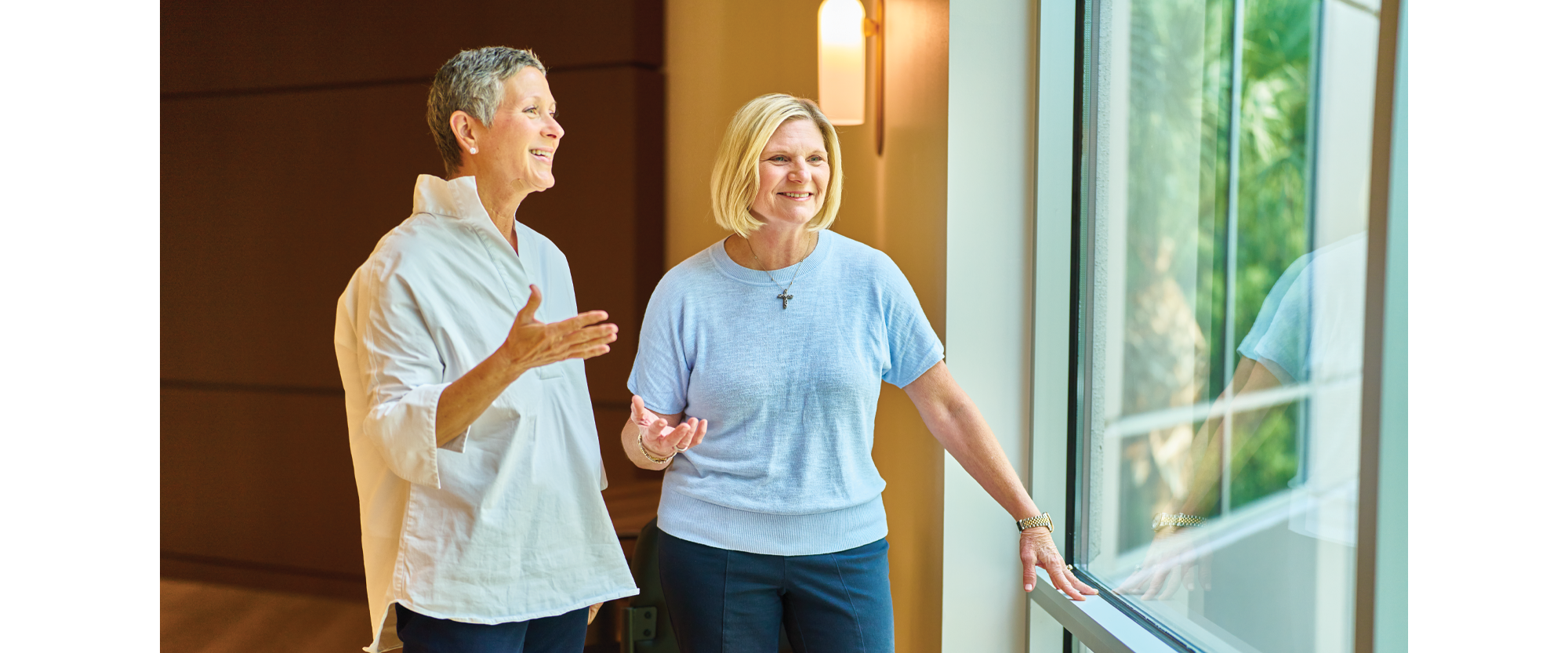
I’ve packed enough lunches to know she’s right, and to know exactly where the four-inch sticks would live in my fridge.
The same instinct shows up in newer formats.
“We have celery dippers, which are two inches—almost bite-able,” Amy says, of the format introduced last year at the International Fresh Produce Association Global Produce & Floral Show. “And, again, really leaning into ‘How do we add some type of complementary ingredient?’”
This move to convenience and new items is important to Sammy and the team.
“Certainly when it comes to convenience through value-added expansion,” Sammy says. “But I also think about unique items from genetic traits, ones with the nutrition and convenience that make it easier for people to consume our product. The genetic piece and the IP, having items that are unique and very difficult to compete with, would be our way of innovating and supplying going forward.”
Tray-pack corn is another big area of differentiation that consumers are clamoring for. Being able to use nearly all the corn in a tray coincides with an ever-growing movement around reducing food waste and packaging.
“To that end, and to ensure we are bringing the most value to our customers, when we make big changes to a product or packaging, none of it happens without the retailer as a partner, not just a customer,” Amy says. “Retailers have the most connection to the consumer. More than we do. It’s all about working with them on what they want, too—that’s how this industry works.”
Knowing an industry that well hasn’t spared the Dudas from getting some of it wrong.
“We’ve made many poor decisions, and we have made great ones,” Tracy says, smiling at the gamble of it all, but also the faith. “But I guess we’ve made more good decisions than not—we’re still here today, and hopefully we’ll be here for another hundred years.”
Ask any of them why the good decisions have outnumbered the bad, and the answer keeps landing in the same place.
“These aren’t glamorous businesses,” Sammy says. “It’s down to the dirt—whether you’re building a house from the dirt or operating at the dirt level, it really starts there. There’s no job beneath me. All of those are very integral. If you really want to be successful at the end, you’ve got to understand the beginning.”
It’s the kind of line that would sound rehearsed from almost anyone else. From Sammy, sitting in that leadership seat, it doesn’t.
Sammy hesitates for a moment, hoping to find the right words.
“I want to believe it’s authenticity. There’s a real obligation to authenticity that is so lacking in today’s environment. We’re a nation of skeptics and cynics. We want some authenticity, and I’m not saying we’re perfect, by any means, but that believability is also part of our culture,” he expresses.
It’s a claim I found myself believing well before he made it.
“It’s just the way we are,” he says.
That same lack of pretension shows up in how the family shares control, strategy, and growth. Today, the company keeps its pool of wisdom strong and plentiful with a Board of Directors, including outside independent directors, to advise the company. Leadership is both family and non-family, or rather chosen family as the Dudas see it.
"Any company that lasts 100 years, you’ve had to adapt, be willing to change‚ to recognize that what you’re doing isn’t working and you’ve got to find a different way to do things."
Tracy Duda Chapman, Chief Legal and Administrative Officer, DUDA
At 100 years in, this way of approaching business, scalable growth, building something that lasts, and faith is a legacy DUDA desires to continue passing on to future generations. Just like the Three Seniors did.
And the compass pointing toward all of it is the same one that’s guided the company for a century.
“That curiosity of staying abreast of what’s going on in the marketplace will guide our decisions,” Sammy says. “As long as we do that, I think we’ll remain relevant.”
Endurance, faith, and the DNA of curiosity. In the bones of it, this is a story about enduring in the face of hardship and challenge. In the heart of it, it is the story about a dream and a family, and the hands that carry an immigrant’s dream into the soul of today.
Ask Sammy what comes after that, and the curiosity answers before he does.
“We’ll just have to make the moves that, historically, we’ve been successful with,” he says. “Recognizing those and implementing those, I think, is the key to success for the next 100 years.”
A hundred years of curiosity hasn’t made the Dudas certain of what comes next. It’s only made them unafraid of not knowing.