When I recently spoke with the owner of our neighborhood pizza shop, he shared something that stayed with me. If we call the shop directly and place our order with them rather than a delivery app, he said, we’ll get a much better value for our family.
The reason is simple: We would most likely get a chance to speak with the owner himself, a man who loves his community and employs people who feel similarly. While delivery services are lovely, there are the added fees, the layers, the distance between the customer and the kitchen. It’s an amazing solution for efficiency and ease—but it removes the connection. Something is lost the further we get from one another.
 Then he said something that felt bigger than pizza: Life didn’t get expensive—you and I just got further separated.
There’s a kind of inherited wisdom in that statement—something people in our industry have known for generations. This business has never just been about product moving from Point A to Point B. It’s been about people. About the relationships that close the gap between uncertainty and trust.
I have to walk a fine line with this analogy, because this isn’t about dismissing convenience or efficiency. It’s about recognizing a growing disconnect, one that’s showing up in the fresh produce industry in very real ways. More and more, we’re losing the instinct—and sometimes the ability—to simply pick up the phone and call each other when times get tough.
 We hear about a storm on the East Coast and assume there will be a produce shortage. Or we assume that shortage won’t reach a specific retailer. So instead of a buyer who, in wiser days, might have called the strawberry desk in California to ask whether the truckload will make it, decisions get made in isolation. The buyer just decides not to buy.
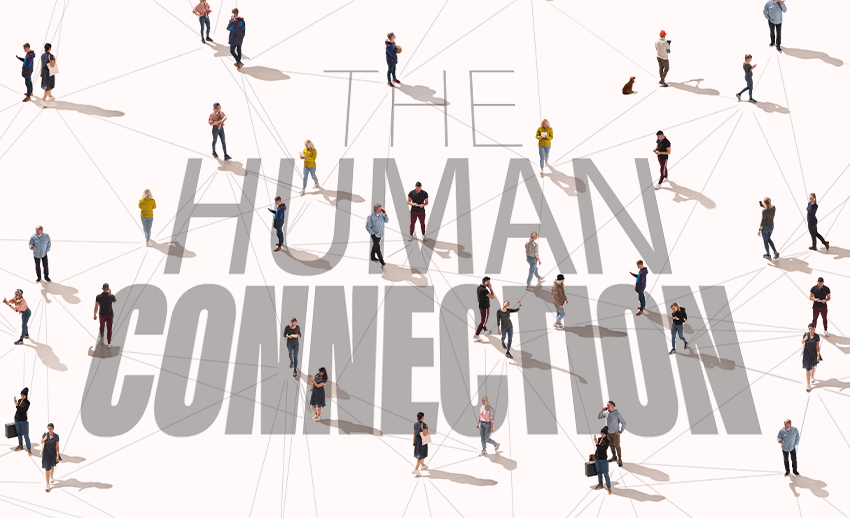
That’s the current tension: We are more connected than ever, yet operating further apart.
Over time, that distance creates space for more cost, not less. Efficiencies once maintained through constant contact and conversation have been replaced by systems—spreadsheets, forecasts, and analytics. And while those tools are powerful, they don’t carry the compassion, intuition, or lived experience of someone who understands both sides of the desk.
That’s not to say more efficient channels aren’t a boon, because they absolutely are. Just ask me. As a mother of a three-year-old and a one-and-a-half-year-old, convenience matters. Technology matters. Systems matter.
But, something is lost the further we get from one another.
 And that’s the part we have to be intentional about passing on, especially to the next generation coming into this industry. Not just how to read the data, but when to reach for the phone, to do what the data can’t: Lean on relationships, trust, and honesty to find solutions that are good for everyone, built in moments like these. Not just how to manage risk, but how to share it. Not just how to transact, but how to trust.
So yes, let technology make our lives easier. Let it make our businesses more efficient.
But let’s not lose the ability to pick up the phone.
Let’s not lose the relationships that have always made this industry work.
Because in the moments when things get uncertain—and they always do—that connection is still our greatest advantage.