Name the day, and I am surrounded by notepads, Post-it®s, and shreds of paper. My computer has at least 23 tabs open in a single browser, with at least two spreadsheets, three email drafts pending, and five tasks running in the background. And I am just a writer, sitting in the wings of a vibrant and dynamic fresh produce industry.
At any given time, I have access to any of the information I may need, but quickly, accurately, and how complete? That may take me a while. I am not making decisions that live and die by the truckload, the bin, the pallet, the conversation.
Kevin Head, Director of Food and Beverage at RSM, understands that fresh produce is a different industry. It requires its own unique services, a tailored approach to accountability and traceability, and technology that does not complicate the act at hand, but streamlines it. Find out more from Kevin as he addresses the traceability challenges today…
 Imagine receiving a call at 4:30 pm on a Friday afternoon.
A customer needs to know where a specific lot originated, where it shipped, and who received it. They need the information quickly, and there's little room for uncertainty.
At first, the request sounds simple. The information exists somewhere within the organization. But as teams begin searching, they discover that supplier records are stored in one location, shipping details are tracked elsewhere, quality documentation is maintained in another system, and supporting information may live in spreadsheets, emails, or paper files. What started as a straightforward question quickly becomes a company-wide effort to piece together answers.
For many produce companies, this scenario feels all too familiar.
One of the reasons traceability issues are so difficult to address is that they often remain hidden during normal operations.
Products move through the supply chain, orders are fulfilled, and customers receive their shipments. Day-to-day processes continue without major issues, creating the impression that everything is working as intended.
 The weaknesses only become visible when urgency enters the picture.
A retailer requests documentation. An audit is scheduled. A food safety concern emerges. A recall investigation begins.
Suddenly, the organization's ability to locate and connect information becomes critical, and teams discover just how difficult that process can be when data exists across multiple disconnected sources.
The challenge is rarely a shortage of information. More often, it's the challenge of bringing together information that lives in separate systems, departments, and processes.
When traceability information cannot be produced quickly, the consequences extend beyond inconvenience.
Employees are pulled away from their daily responsibilities. Operations teams begin searching records. Leadership becomes involved. Valuable time is spent locating information that already exists but isn't easily accessible.
 In more serious situations, delays can increase costs and operational disruption. During a recall investigation, organizations that cannot immediately identify affected products may need to cast a wider net than necessary. This can increase waste, create additional expense, and disrupt normal business operations.
There is also the matter of customer confidence.
Retailers, distributors, and foodservice organizations expect timely access to accurate traceability information. Their confidence often depends not only on the information itself but also on how quickly it can be provided.
The ability to respond efficiently has become an important part of maintaining trusted business relationships.
Traceability is often associated with regulatory compliance, but its value extends much further.
Strong traceability capabilities support risk management, operational resilience, and business continuity. They provide organizations with greater visibility into how products move throughout the supply chain and help leaders respond more effectively when unexpected events occur.
 As supply chains become increasingly complex, visibility has become a strategic advantage. Organizations that can quickly answer questions, verify information, and assess impacts are often in a stronger position than those relying on manual processes and disconnected records.
In many ways, traceability is evolving from a compliance obligation into a core business capability.
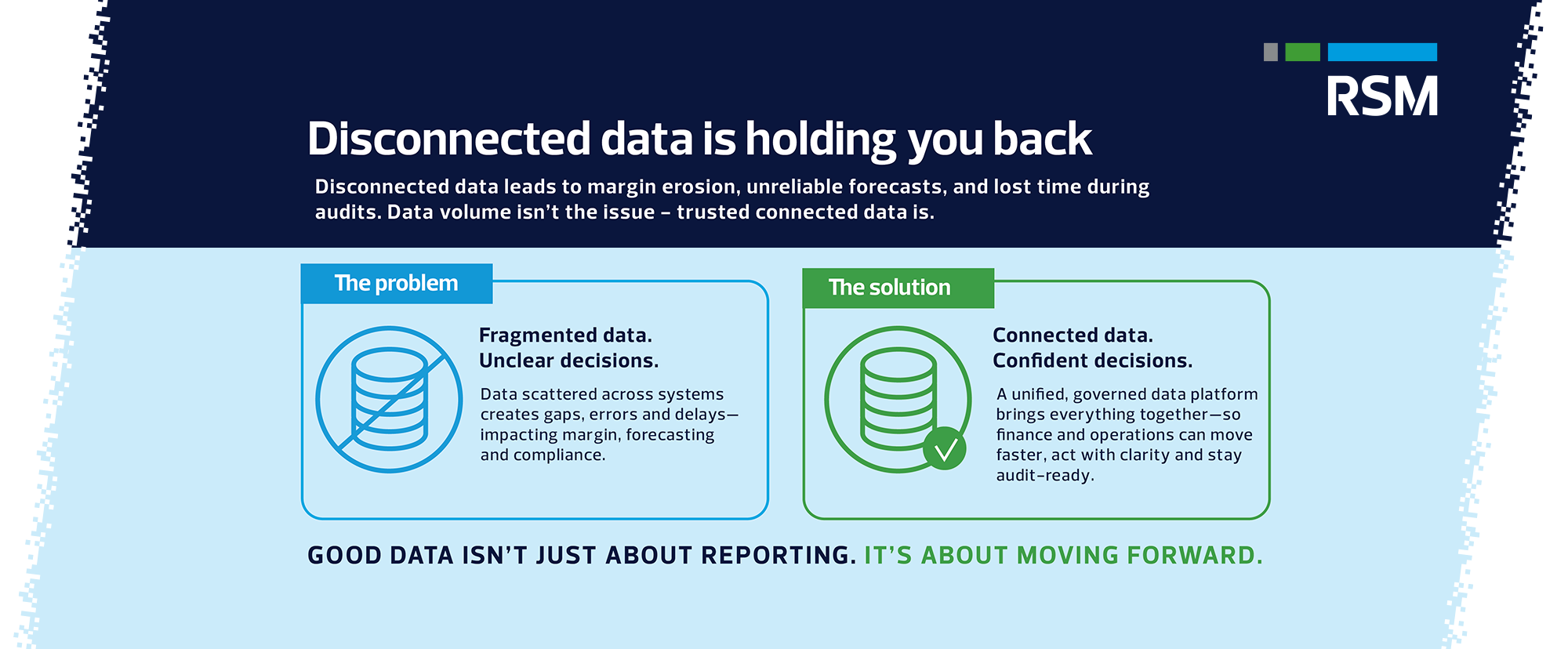
For many organizations, the biggest barrier to effective traceability is fragmented information.
Data often exists across ERP systems, quality management platforms, grower records, warehouse systems, spreadsheets, emails, and paper documentation. Each source contains valuable information, but finding and connecting that information quickly can be difficult when timing matters most.
 As businesses grow, those challenges tend to become more pronounced. More customers, suppliers, locations, and products create additional complexity, making visibility increasingly difficult to achieve through manual processes alone.
The issue is not collecting more data. Most produce companies already have the information they need.
The issue is making that information accessible when it is needed most.
Modern traceability focuses on creating greater visibility across systems and processes so teams can access information quickly and with confidence.
 When traceability data is connected, organizations can respond faster to customer inquiries, strengthen recall readiness, reduce manual effort, and improve audit preparedness. More importantly, they can shift from reactive information gathering to proactive decision-making.
The goal isn't perfection. It's confidence. Confidence that when questions arise, the organization can provide accurate answers without spending hours searching for them.
Few produce executives spend their days thinking about traceability. Yet when a recall, audit, food safety issue, or customer request arises, it quickly becomes one of the most important capabilities in the business.
 As industry expectations continue to evolve, the organizations best positioned for the future will not necessarily be the ones collecting the most data. They will be the ones that can connect, access, and trust the data they already have.
Because when that Friday afternoon call comes, the ability to provide answers quickly can make all the difference