The produce department you see today did not happen by accident—it was built over decades by people who refused to accept what was and instead pursued what could be.
I served as Vice President of Produce and Floral at the Vons Supermarket chain throughout the 1980s and 1990s, overseeing operations across 328 stores in Southern California. In 1997, I transitioned into full-time consulting, working with growers, shippers, brokers, commodity boards, and retailers across the industry. Along the way, I also had the privilege of serving on numerous boards and committees, including as Chairperson of the Produce Marketing Association (now the International Fresh Produce Association) during a period of significant industry growth.
Over the course of my career from 1960 to 2019, I witnessed the produce department evolve from a modest 60–70 SKUs to more than 700. That kind of expansion was not inevitable—it was driven by individuals who saw beyond the present and committed to building something new—products, categories, and ideas that had not yet existed.
This series is rooted in a simple tension: Much of what defines today’s produce department is often taken for granted, as if it has always been this way. It has not. What exists today was shaped by people who pushed forward, took risks, and changed the business' trajectory.
With these articles, my goal is to bring those stories back into focus—not just to remember them, but to make clear what it takes to move this industry forward. Because the lesson is not just about the past—it is for the next generation.
In my mind, these were the true innovators—and their stories are worth remembering.
What Mike and David Yurosek saw—and what too many in this business still miss—is that waste is often just unrealized opportunity. Many in our industry today understand the baby carrot as a successful vehicle for category growth, but may not have the story behind the innovation, how it changed the category, and ultimately added momentum to carrot demand.
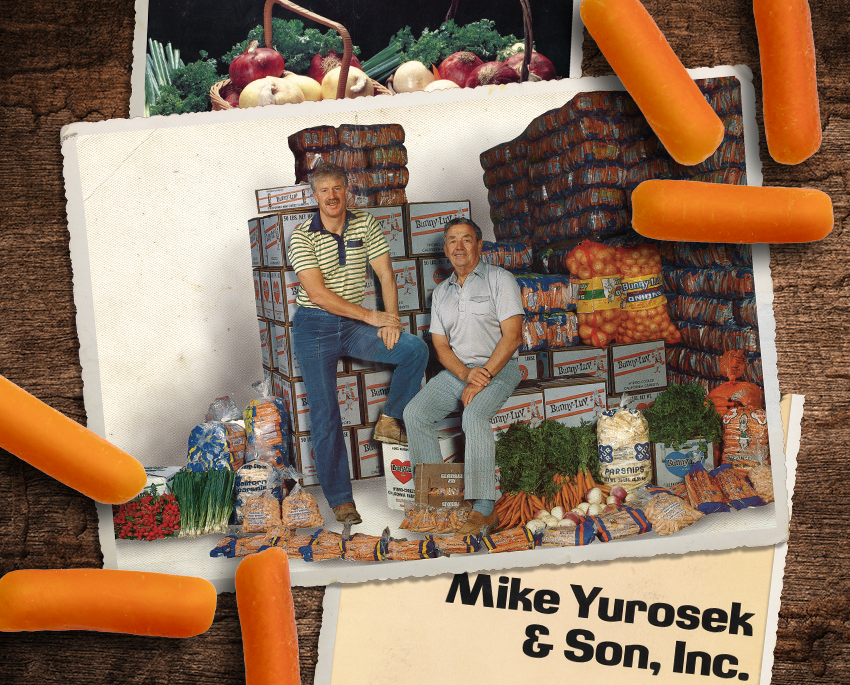
The focal point of this piece is what occurred in the 1970s and early 1980s, but first, I should start at the beginning. In 1939, John Yurosek launched the predecessor to Mike Yurosek and Son, Inc. in California’s fertile San Fernando Valley. His younger brother, Mike, soon joined him to form Yurosek Brothers, a company that steadily built a reputation for high-quality vegetables and dependable service.
What stands out is how the company viewed challenges as a pathway to disruption and category differentiation.
After John retired in 1965, Mike took ownership and chose to focus exclusively on carrots. As consumer packaging emerged, he worked with his wife, Madeline (Sue) Yurosek, to create a brand identity—resulting in the name and design “Bunny Luv.”
In 1969, Mike’s son, David, joined the business, leading to the formation of Mike Yurosek and Son, Inc.
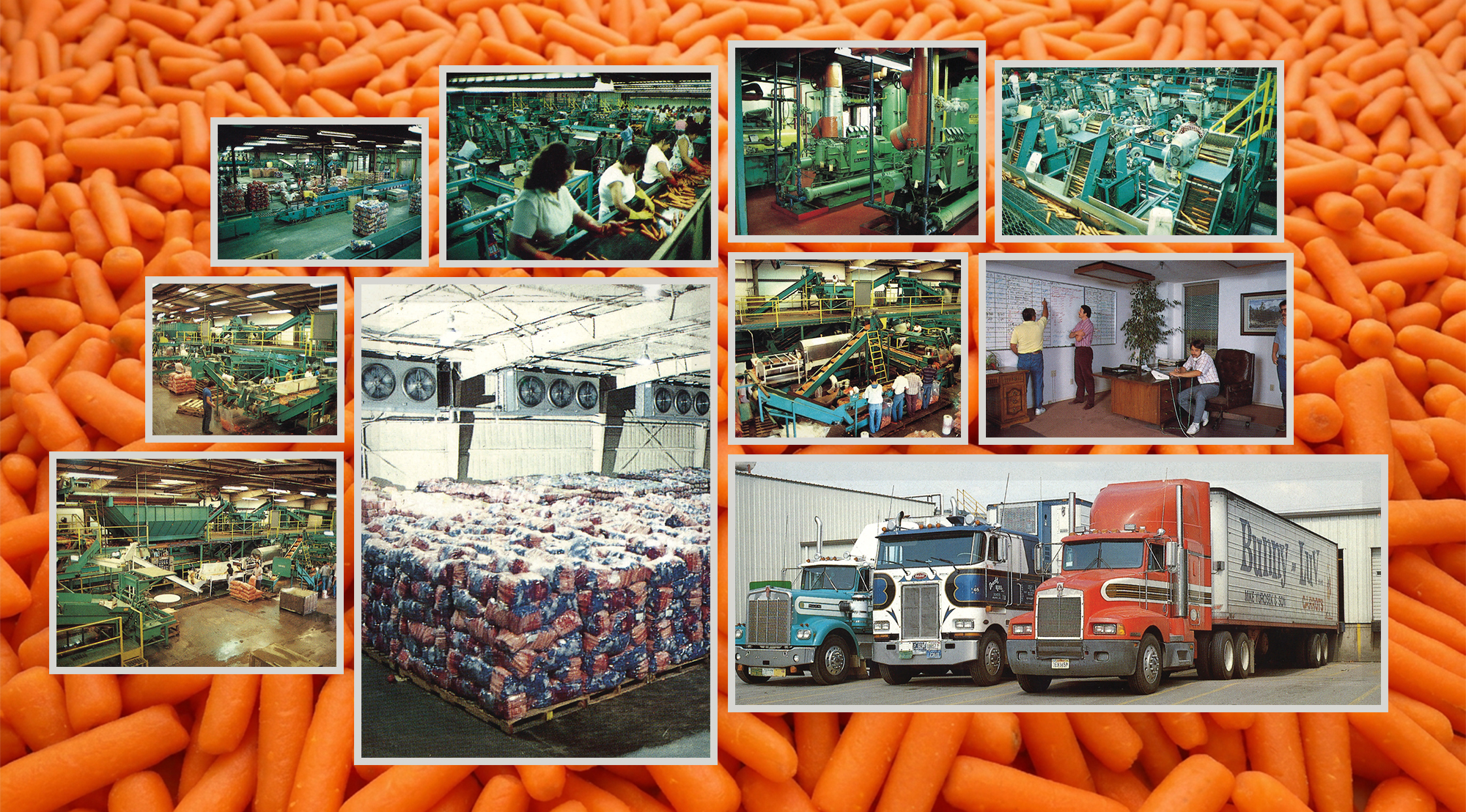
With an experienced domestic and international sales staff and modern production facilities across California and the United States, Mike Yurosek and Son, Inc. delivered fresh, high-quality products. But what stands out is how the company viewed challenges as a pathway to disruption and category differentiation.
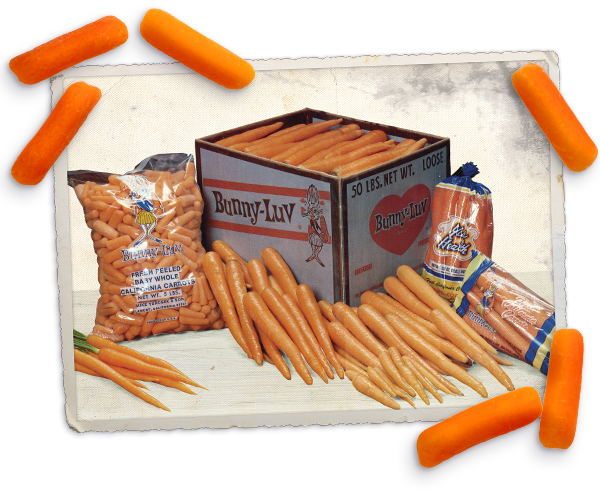
In the 70s and early 80s, the carrot business was basically bunched, bulk, 1 lb, and 2 lb bagged carrots. Trust me, that was it. At that time, a carrot grower and packer team with the Bunny Luv brand, by the name of Mike and David Yurosek—father and son—were tired of losing about 30–40 percent of their carrot harvest because of cosmetic flaws. In 1986, they ran some of their misshapen carrots through a bean slicer, then tapered the ends with an automated peeler. Mike and David decided to make the then-huge investment in newer, more modern machinery.
This enabled Mike and David to cut the carrots into 2” lengths, polish the outer skin, and package these cosmetically flawed carrots into what is now known as “baby carrots.” The team packaged these baby carrots under his Bunny Luv brand in one- and two-pound bags.
These baby carrots changed carrot consumption from about 6 lbs in the 1980s to 14 pounds per person in 2007.
Due to the high cost of processing, these “baby carrots” were priced at wholesale 3–4 times that of one-pound carrots. Mike and David were taking a huge chance that produce buyers and consumers would buy this new and innovative produce item.
The baby carrots won instant shelf space from retailers and were flying off the shelves. Both the grower/packers and retailers could charge more per pound and create a nonexistent value-added carrot category. These baby carrots changed carrot consumption from about 6 lbs in the 1980s to 14 pounds per person in 2007. This innovation cut farm waste and created a new snack category. Today, baby carrot producers have refined the process and grow carrots specifically for this purpose.
In 1995, Mike and David sold their company to Grimmway Farms, making Grimmway the largest carrot producer in the U.S.
As I mentioned at the opening, waste is often just an unrealized opportunity. Mike and David did not accept the limits of how carrots had always been sold; he reimagined what they could become. That mindset is what continues to separate innovators from operators.
For the next generation coming into produce, the lesson is clear: The future of this industry will not be built by maintaining the status quo, but by challenging it—by looking at what is being thrown away, overlooked, or undervalued, and asking what it could be instead.