To create something worthwhile requires effort. Taking shortcuts to success could delay or even hinder innovations, and I think the team at Red Sun Farms™ would be apt to agree with me.
For the past year and a half, two important projects have been budding to further distinguish the greenhouse grower: relaunching the Chef’s Collection™ mixed medley tomato line and pioneering strawberry genetics research and development.
These projects are monumental in scope and design, a testament to the passion that Harold Paivarinta, Vice President, Sales and Business Development; Leona Neill, Director of Marketing and Packaging; and Paul J. Mastronardi, Business Development and Account Manager, bring to reinvigorating categories and securing volume for the North American supply chain.
When the Tomato brown rugose fruit virus (ToBRFV) first appeared, seed and genetics companies focused on varieties that were ToBRFV-resistant. This led to flavorless varieties and ultimately, as Harold explains to me, low-quality medley packs. But with ToBRFV in the rearview mirror, the focus has once again shifted to breeding for positive traits that enhance the eating experience.
 “We’ve seen the medley category become a catch-all,” Harold illuminates. “There was no rhyme or reason. We conducted enough market research to know there was no real pattern in that mixed tomato clamshell. For example, whatever someone was surplusing at a specific time could end up in a mix. For Red Sun Farms, we wanted to innovate and create a mix with intent. Theoretically, we’re not sweeping the floor and throwing a random mix together.”
As Chef’s Collection germinated in the minds of Harold and Leona, the two dove into varietal exploration with breeders across the globe. Important data flowed in, as Leona and Harold sought to find the tomatoes that delivered on flavor, color, and eating experience.
 “How can we best utilize these varieties that are bred for attributes that deliver?” Leona posed this important question early on in the process of varietal selection. “How can we elevate this category and give it a purpose?”
As the two watched how certain varieties performed in the ramp-up to commercialization, narrowing down the variety selection was no easy feat. Harold pauses here to point at a rendering of his desk from last April. Open pallets sit on top, showcasing tomatoes that range from neon-yellow to deep red. Not a single inch of his desk is visible. Not a grain of table unused. This image was more than a rendering; it was a metaphor of their commitment to the process and to Red Sun’s customers.
“...we wanted to innovate and create a mix with intent.”
Harold Paivarinta, Vice President, Sales and Business Development, Red Sun Farms™
Perhaps one of the most unique aspects of the creation of Chef’s Collection has been the level of input from retail partners. In fact, they’ve been on the ground floor in creating this line.
“Every opportunity we had to see our retail partners, samples were always in tow,” Harold shares. “We saw enough momentum that by the time mid-summer came, we made the commitment to create our interactive booth just to highlight these varieties at Southern Innovations last year.”
In the early stages of trialing, opinions were sought from between 15 and 20 retail partners. By the end of Southern Innovations, the team had received over 100 retail survey responses.
“It was pretty daring for us to go out there and have an exhibit space where no product was visible at all. Literally just us in our lab coats, inviting people back to evaluate products,” Harold says, chuckling. “But the industry gave us tremendous feedback that we could use as actual data.”
The company took a bold approach to understanding which tomato characteristics and attributes appealed to attendees. Before they even tasted the product, they were asked to do a blind taste test that posed a simple question: What are you expecting to taste based on sight alone? After the blind taste test, attendees tried the tomatoes and shared their impressions.
The data collected at the show provided tremendous feedback, confirming the project’s direction.
“We assembled that data to outline what consumers visually expect from these tomatoes and the actual tasting results, and shared that with our partners. For example, ‘These are the characteristics you’re looking for, and this is what you actually tasted.’ We also validated what our retailer partners are asking for. It ensured we were on the right track,” Leona adds.
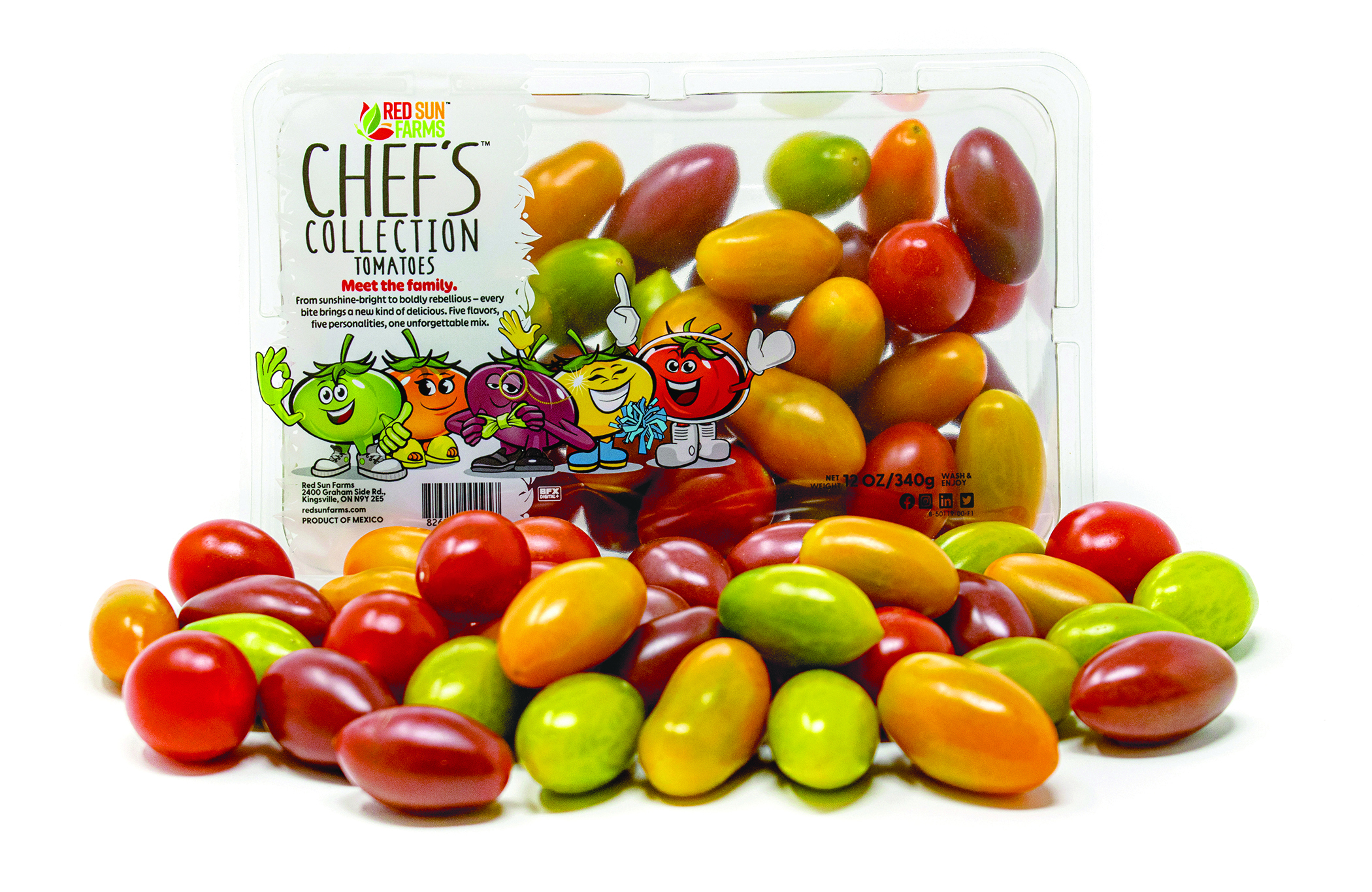
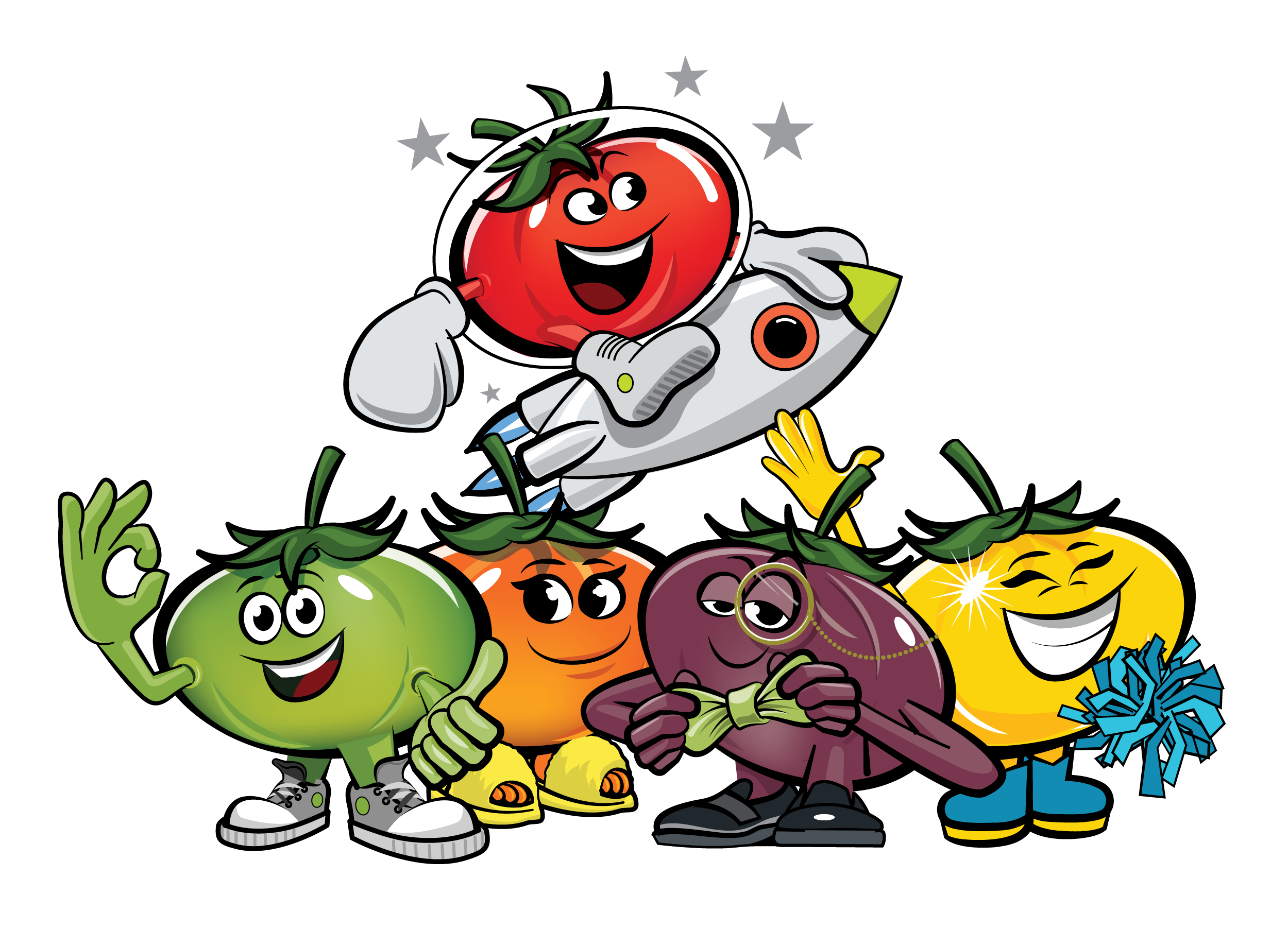
With confirmation that they were headed in the right direction, the team decided to give the tomatoes in the Chef’s Collection medley personalities.
“Our first foray into giving a tomato personality was Sweetpops, and I think Sweetpops was a home run,” Harold tells me. “So, we had established that template. These tomatoes might be genetically linked, but they still have their own characteristics and attributes that make them stand out.”
The first step in giving them personalities was to name the tomatoes in the Chef’s Collection. To do so, Harold and Leona gathered team members and asked them to individually write biographies for them.
“It was shocking to see how closely everybody’s biographies aligned with mine and Harold’s vision,” Leona notes. “At that point, we knew we’d nailed down the personalities based on the flavor attributes and the pack.”
After finalizing the character design with a trusted partner, each Chef’s Collection tomato personality came to life. Ranging from bright and bubbly to sophisticated, each Chef’s Collection tomato in the assortment is a burst of flavor:
One of the elements that makes the Chef’s Collection relaunch even more exciting is the packaging partner Red Sun Farms secured a deal with. As Leona explains, typical printing is restricted within a set of plates, but this new printer utilizes digital technology.
“Before, we didn’t have the capability to create multiple impressions without creating multiple plates. With the capabilities of this packaging supplier, we can now run multiple prints on Top Seal, labels, and bags,” she emphasizes. “We’ve developed 11 images in total, so when these packs run in a sequence, every case that goes out to our customers will end up with a different combination of those 11 impressions. It will never be the same.”
The goal of this packaging design is to drive consumer engagement and highlight the intentionality of each variety.
“When it gets to the shelf, the idea is pretty simple. If you’re a consumer that resonates with SweetPops, then you’re going to gravitate to the SweetPops key focus,” Leona outlines. “If you’re all about the yellow tomato or her personality, you might gravitate there. We were trying to create a collect-them-all feel.”
And Harold emphasizes one final point.
“There are no losers in this pack,” he says. “Only winners.”
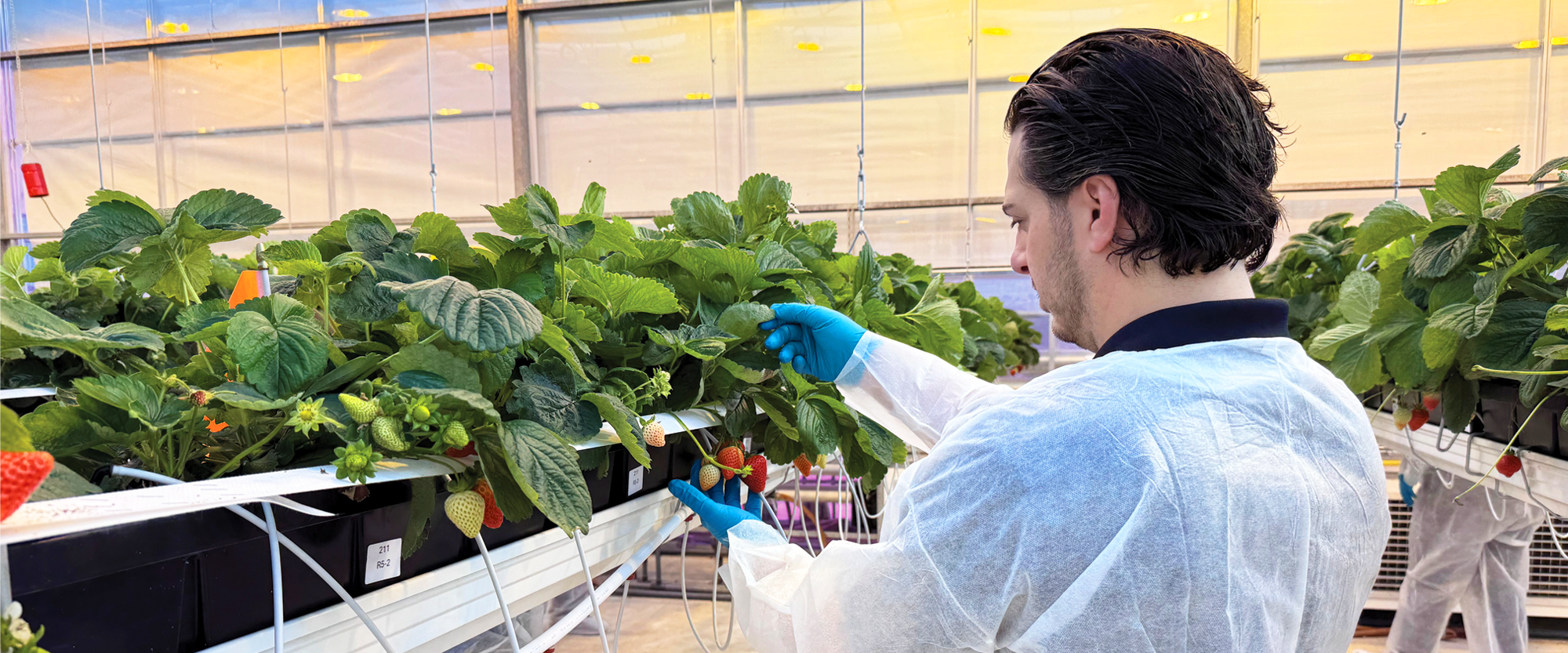
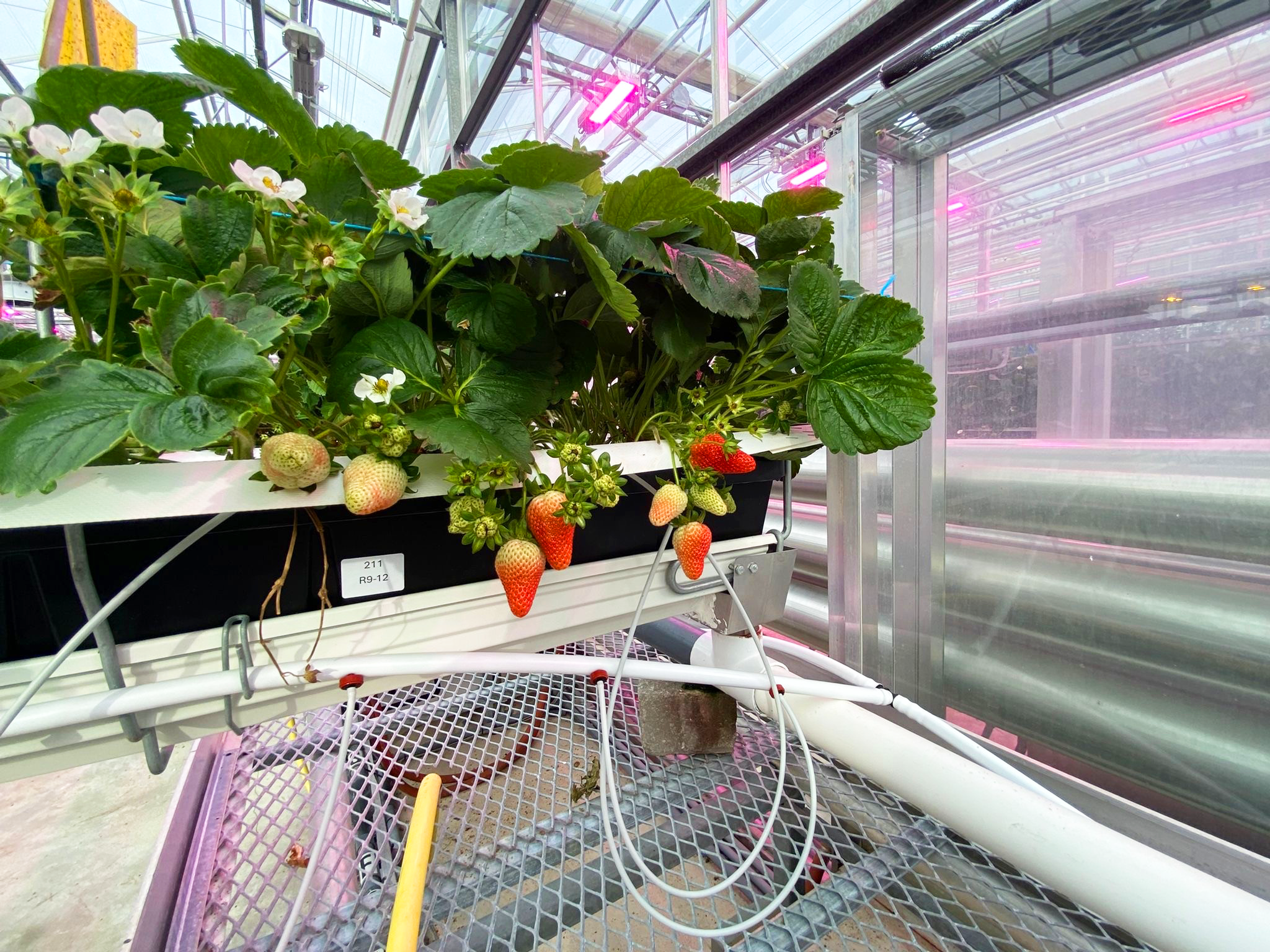
Red Sun Farms’ interest in reinvigorating categories extends beyond medley tomatoes. For two years now, it’s been developing a strawberry program to answer the growing demand to find a strawberry variety suited to North American greenhouse cultivation and supply chains.
To do so, Red Sun Farms is working with Heritable, a Google Moonshot spin-out company, and CIV, the second-largest strawberry breeder in Europe, which is based in Italy.
 “We went and embarked on the project of breeding a strawberry for the North American market, for high-tech greenhouse cultivation. With climate change, a few degrees change could render a field-grown strawberry production kaput,” Paul explains. “We have to find a solution quickly, and we have to do it with the entire supply chain in mind.”
Breeding a strawberry that holds up to the rigors of the North American supply chain is no easy feat. Paul notes that the berry has to work for growers and retailers.
For Phase I of this process, Red Sun Farms turned to its retail partners for valuable feedback.
“Eight retailers from across North America joined us at a test greenhouse in Niagara. They represented 14,000 stores, and they participated in the first breeder trials for strawberries with us. To stress the importance of this, this is the week prior to Thanksgiving in America, and we’re asking some U.S. retailers to join us. We knew we’d hit a hot button because we got that much of a reply during an impossible time,” Paul notes.
“We’re leveraging our veg partners to come on this strawberry journey with us, and the results have been excellent.”
Paul J. Mastronardi, Business Development and Account Manager, Red Sun Farms™
In a full-circle moment, the Phase II trials for this program occurred at SEPC’s Southern Exposure, hosted from February 26 to March 2, 2026. Retailers walked an entire room of strawberry samples. Addressing everything from color, texture, sweetness, and sour properties to the size and consistency of the fruit and the seeds—no leaf was left unturned.
“We’re leveraging our veg partners to come on this strawberry journey with us, and the results have been excellent. We’ve already found some clear winners,” Paul says. “Traditional breeding is 10 years; with Heritable, we’ve gotten it down closer to four. So, four years from now, we’ll be narrowing down the variety and getting it into production. Between the germplasm, the propagator, the cultivator, the sales/marketing agency, and the retailer, you have all the legs of the stool. You get a program that’s geared to this market, and it fills a need.”
The challenges and pressures of the North American market can’t be overstated, but companies like Red Sun Farms are reinventing categories and spearheading research with the potential to preserve them.