For committed fresh produce suppliers like WINDSET FARMS®, geographical expansions are more than just an opportunity to expand a company’s market presence; they are a path to becoming a more formidable supply-side partner.
For this vertically integrated grower, innovation and excellence have come together in the form of a cutting-edge greenhouse in Delta, British Columbia—promising tenfold benefits for the company and its retail partners.
With a network spanning three regions across North America, the supplier has secured the ability to ensure its customers a year-round supply of greenhouse-grown tomatoes, peppers, cucumbers, and lettuce.
In our latest exploration of this tactical move, I spoke with Ryan Cherry, Director of Sales, to discuss the benefits provided by such a massive growth play and the grower’s fundamental commitment to true partnership and collaboration.

 Ryan Cherry, Director of Sales, WINDSET FARMS®: It really goes back to our roots. Our Founders, John and Steven Newell, grew up on a poultry farm and, from a young age, they developed a passion for agriculture. When they started Windset Farms back in 1996 with just a four-acre bell pepper operation, their goal wasn’t just to grow produce—but to feed their communities fresh, high-quality food.
We’ve always believed in local production and owning and controlling our operations so we can guarantee consistency for our customers. Expanding in high-population areas has been a key part of that strategy. It means we can get our produce to customers quickly, reducing food miles and keeping everything as fresh as possible. At the same time, we’re always looking at access to resources—like our partnership with BC Hydro, which allows us to run on 100 percent renewable hydroelectric power. That’s a huge competitive advantage for us and our customers who are prioritizing sustainability.
At the heart of all this, though, is service. We want to be able to say ‘yes’ to our customers, no matter the time of year. That’s why we’ve invested in year-round production across three regions in North America—BC, California, and Mexico—so we can keep shelves stocked with local, high-quality produce no matter the season. This expansion is another step toward that goal.
RC: Our partners and consumers alike want and are asking for locally grown produce. To be successful in this venture, they require a consistent, high-quality supply. Our multi-regional approach allows us to grow and ship locally whenever possible while also balancing seasonality so there are no gaps in supply.
The expansion in Delta, BC, is a huge win for our Canadian partners. There’s been a big shift toward sourcing more BC-grown produce, and we’re now in a position to deliver that year-round. On the U.S. side, our facilities in California and Mexico ensure we can keep up with demand across all our key markets.
What this really means for our retail partners is reliability. We’re a one-stop shop. If they need tomatoes, cucumbers, peppers, or specialty items, we’ve got them covered. And because we’re vertically integrated, our partners don’t have to worry about unexpected disruptions. They know that when they put Windset on their shelves, it’s going to be consistent, fresh, and full of flavor every time.
"We want to be able to say ‘yes’ to our customers, no matter the time of year. That’s why we’ve invested in year-round production across three regions in North America—BC (British Columbia), California, and Mexico—so we can keep shelves stocked with local, high-quality produce no matter the season.”
Ryan Cherry, Director of Sales, WINDSET FARMS®
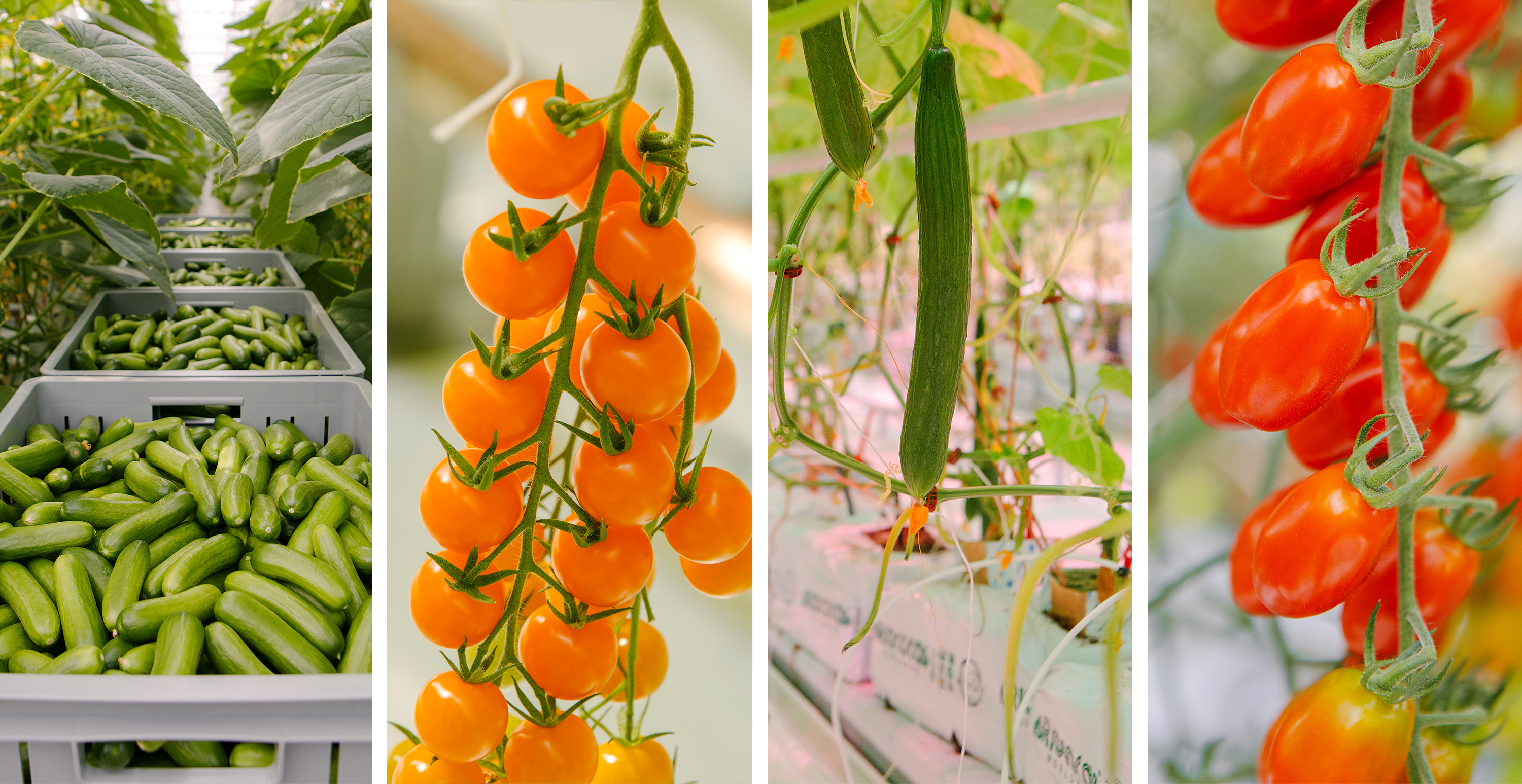
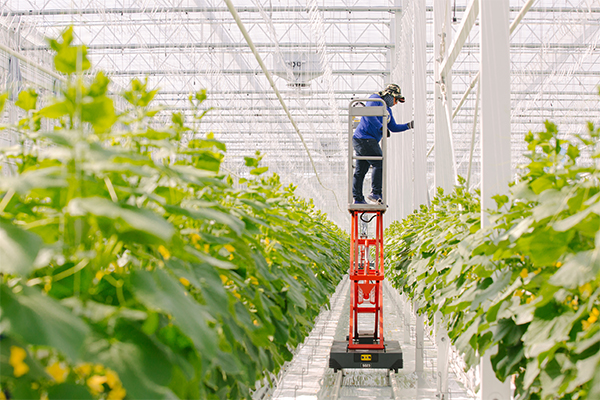
RC: One of the biggest highlights is we’re running on 100 percent renewable hydroelectric power, thanks to our connection with BC Hydro. This has allowed us to fully transition to LED lighting in two of our 24-acre greenhouses, which has been a massive win for both energy efficiency and plant growth. LEDs use significantly less power than traditional HPS lights and provide us with more control over the growing environment. This winter, the greenhouses were planted with a variety of FRESCO® Cucumbers and a wide assortment of tomato varieties, including our newest addition to the Windset lineup, VIVO® Tomatoes on the Vine.
Another key feature is our double energy curtain system. One curtain is for light abatement, which significantly reduces light pollution. The other curtain is an energy-saving screen that helps regulate temperatures inside the greenhouse. It lets light in when we need it but helps trap heat, cutting down on our natural gas usage.
Because of investments like these, Windset was named a BC Hydro Clean Energy Champion in early 2025. That recognition really speaks to our long-term commitment to sustainability and making smart choices that benefit both our business and the environment.
RC: We’re always looking ahead. Growth in the greenhouse sector has been huge, and we’re focused on making smart, strategic investments that keep us ahead of the curve.
We’re putting a big emphasis on R&D, researching innovative, new varieties that not only taste great but also have strong virus resistance. That’s why we work so closely with our seed suppliers, so we’re always at the forefront of seed innovation. Our award-winning varieties are a direct result of those partnerships, and we’re excited to continue bringing new produce offerings to market.
While I can’t get into specifics just yet, I will say this—expansion isn’t just about more acreage for us. It’s about investing in automation, sustainability, and our employees so we can continue producing smarter, not just bigger.
When I conclude this insightful conversation with Ryan by asking what elements set Windset Farms apart in the fresh produce arena, he simplifies it to three central pillars: Service. Innovation. Fresh.
“We don’t just sell produce; we build long-term partnerships,” he says, and I immediately sense the validity of this statement. When you align with Windset Farms, you become a part of the Windset family. The growth and success of your business are now a key factor in each strategic decision the greenhouse grower makes.
Which, if you ask me, is exactly what it takes to be the perfect produce partner.